
The Innovation Archive
For my graduation project, I explored how to preserve the experience of a place: through stories, a timeline and conversations with AI archivist Nova.
Explore the project- AI prototyping
- Data research
- Data translation
- Data visualisation
- Conversational UI
- Experience design
- Interaction research
- Frontend development
How do you preserve the experience of a place while keeping each personal story intact?
- My choice
- Nova asks one question at a time. I turn the answers into an editable card with a place, role and moment.
- What you see here
- One contribution has several ways in: the story itself, the landscape, the timeline and a conversation with the archivist.
How do you capture
how a place feels?
For my graduation project, I explored how people experience the Innovation Quarter. I designed a conversation with Nova, a story archive and a timeline to revisit those experiences.
From conversation to archive.
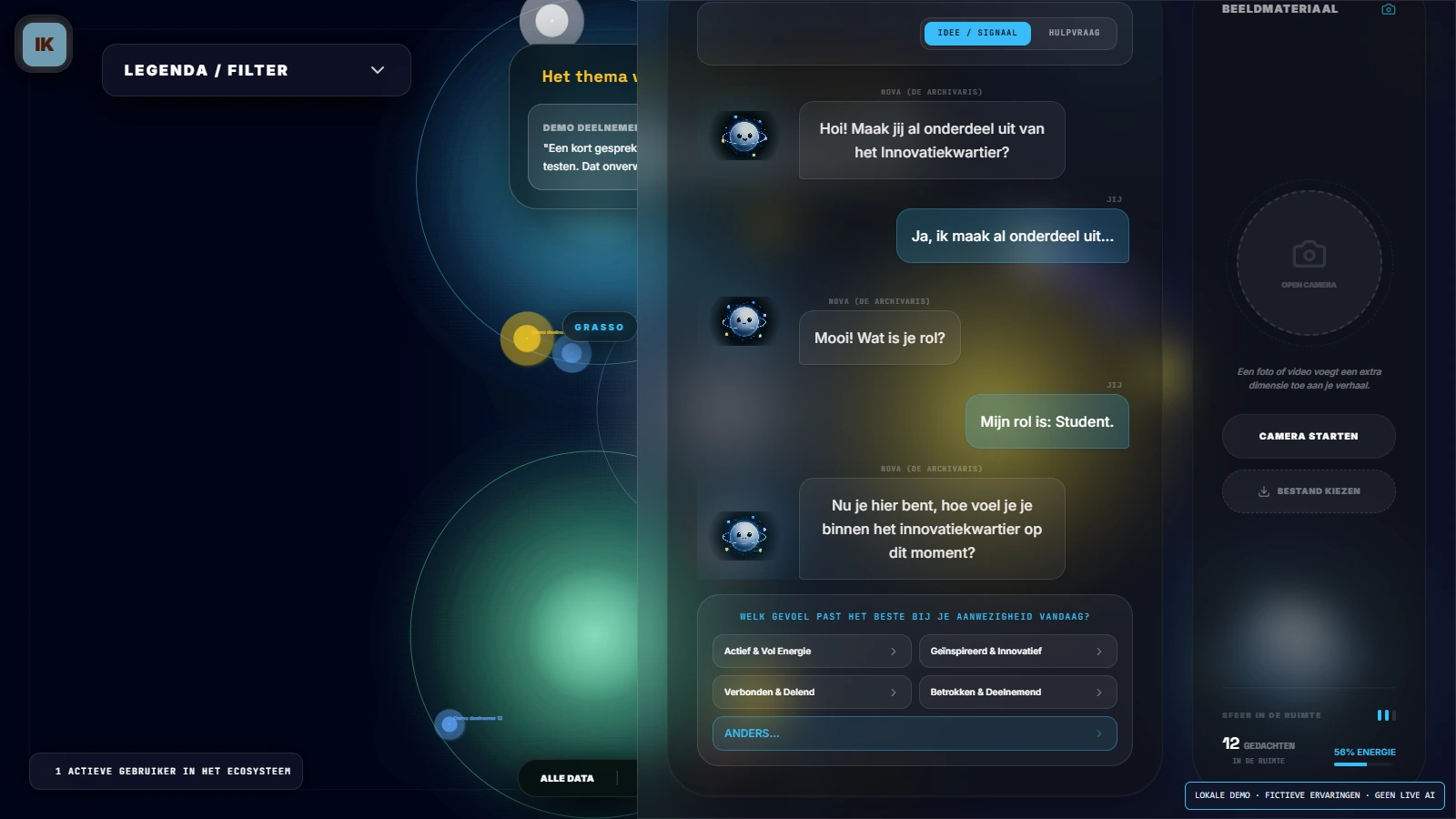
Listen to the visitor first.
I had Nova ask what someone is doing, noticing and feeling at that moment. One question at a time gives the conversation a simple rhythm.
I start with the visitor’s own words. The translation into data comes afterwards.
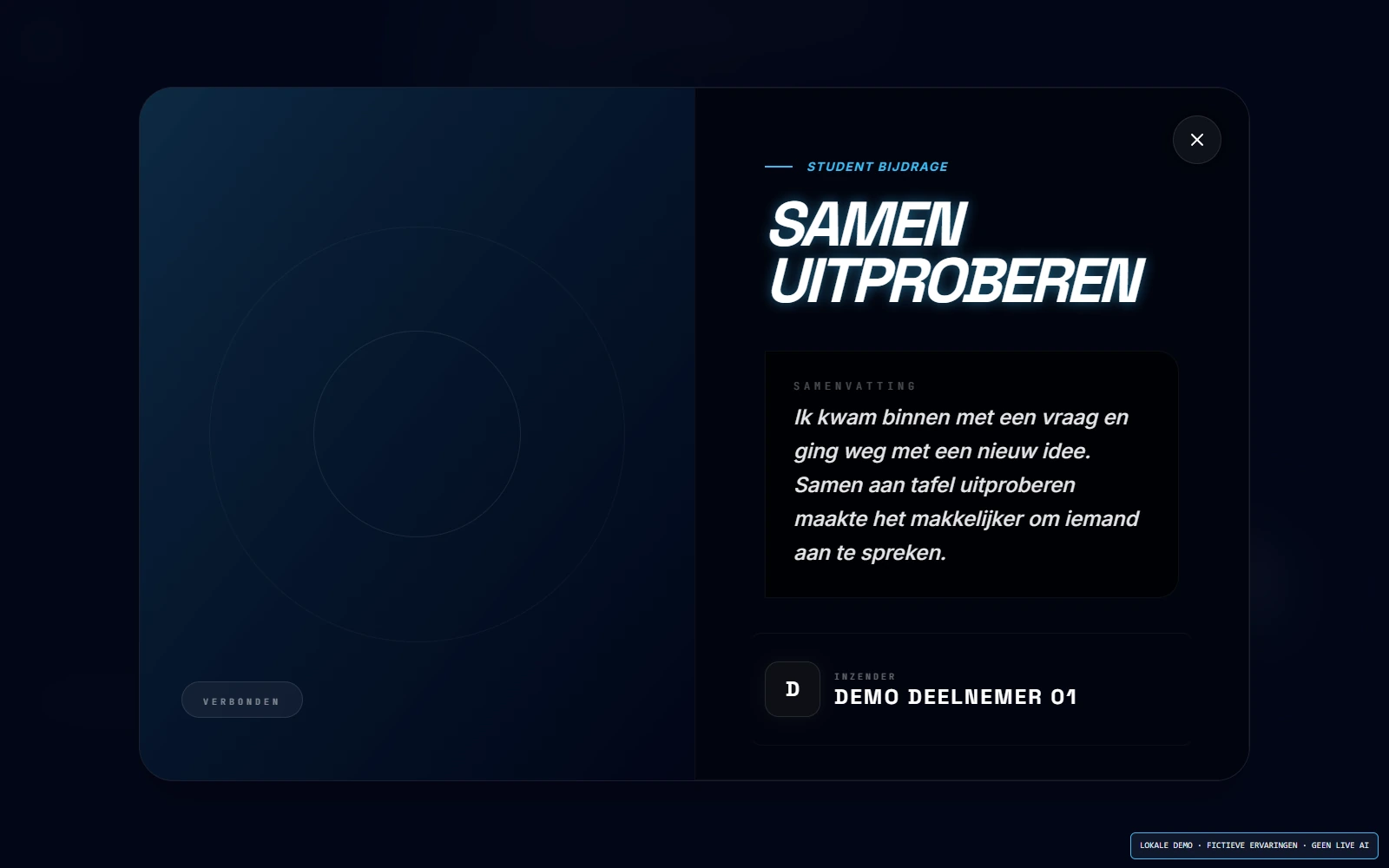
What should be kept from a story?
I chose a title, summary, role, location, moment and experiential signals. These fields make the contribution retrievable in the archive.
The card remains editable. AI can help organise it; the visitor decides whether the wording is right.
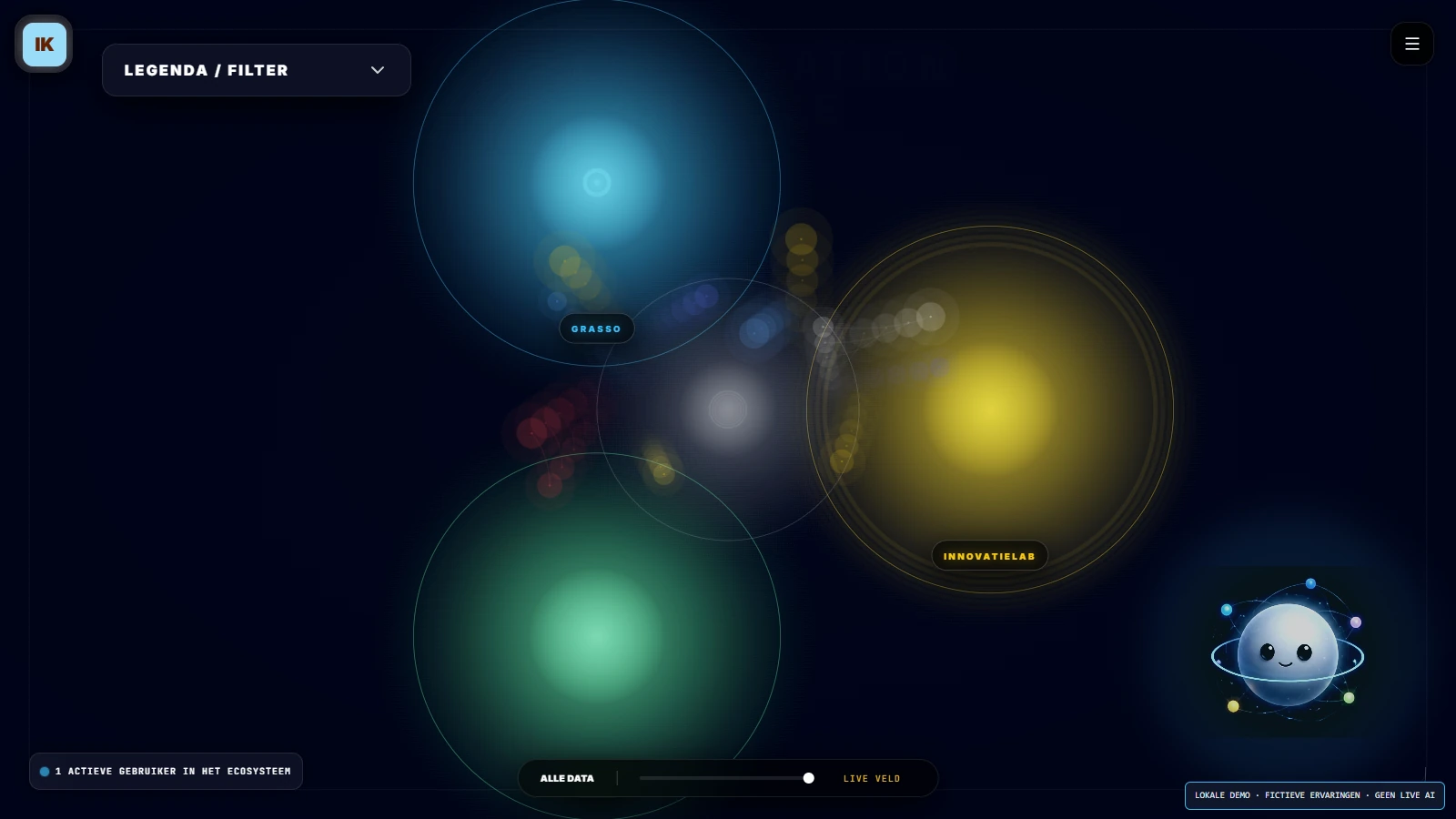
The same story, another perspective.
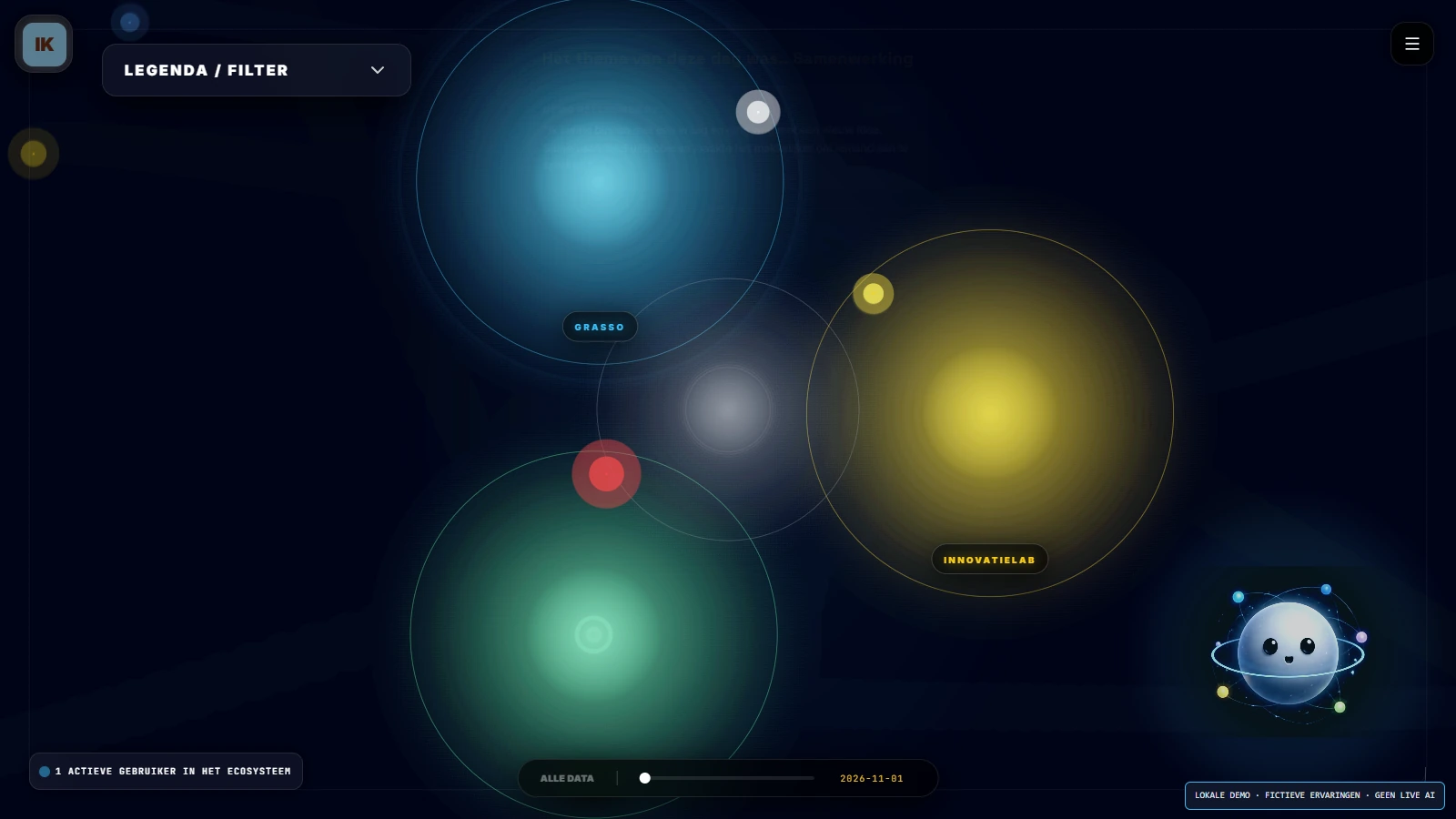
Alongside the individual card, I designed a landscape and timeline. These let someone find their contribution among other moments and locations.
I represent the contributions as a landscape. It remains an interpretation of experiences, rather than a measurement of atmosphere.
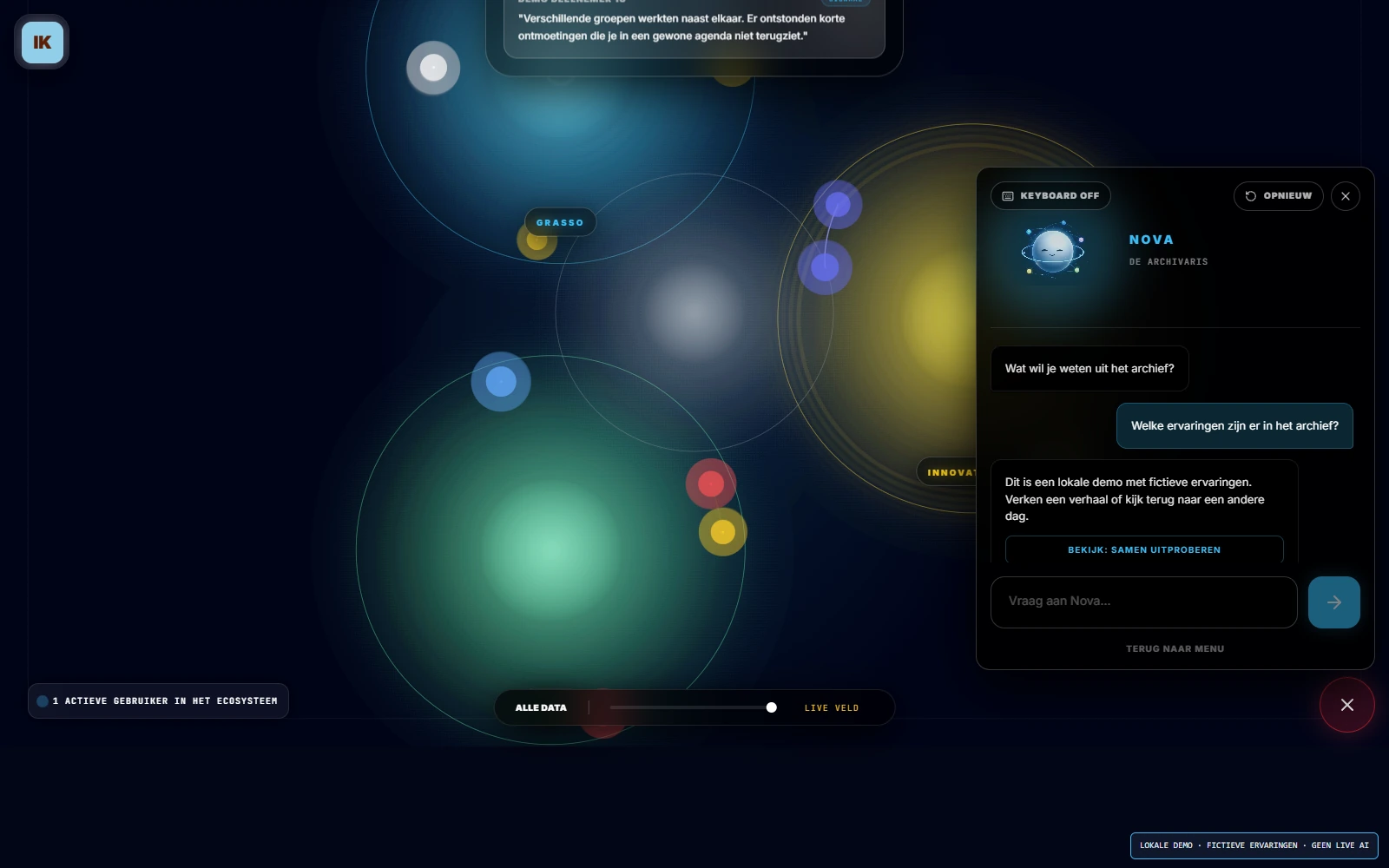
Questions can lead to a story too.
I gave Nova a second role: receiving questions about the collection. The stories provide context, with references to relevant cards.
The archive is the starting point for the answer. This route uses fictional stories and a fixed demo response.
What happened
before?
I wanted to make an experience retrievable later too. The timeline therefore becomes part of the navigation, alongside the archive and landscape.
- EarlierWhat was happening?
- This momentHow do I experience this place?
- LaterWhat has changed?
I keep personal stories accessible as you move through the collection.
The translation behind the experience.
What context do we keep?
I translated the design question into data that gives an experience meaning later: who, where and when.
From text to usable data.
I connected free-form input with editable cards. The story remains readable alongside the archive fields.
More than one way in.
I designed cards, a landscape and a timeline for different ways of looking back. Nova lets you ask questions about the collection.
About this project
How do you experience this place?
What brings someone here? What is happening at that moment? And how does that picture change over time? These questions led me to develop The Innovation Archive for my graduation project in 2026, in the context of Innovatie Kwartier Den Bosch. I explored how to preserve and revisit the experience of an environment.
The story comes first
I designed Nova as a conversation partner that asks one question at a time. AI then helps organise the answers into a title and a short description. I kept the card editable: the visitor should decide whether that wording still fits their own experience.
From open-ended text to an archive
Research, data and interaction design came together for me here. I had to choose which context a story needs to remain understandable later. Role, place, moment and signals from the experience connect a contribution to the archive.
I gave the same data several views. The card preserves the individual story, the landscape reveals connections and the timeline brings earlier moments back. Nova can also receive questions about the collection and link an answer to relevant cards. This is how I explore AI as an entrance to an archive.
What I wanted to keep testing
I worked on the concept, conversation flow, visual translation and web prototype. The prototype has been tested; my continuing question is whether people recognise their own contribution and understand what it means within the larger landscape. The visualisation is my interpretation of the contributions, rather than an objective measurement of a place’s atmosphere.
The app captures shown use fictional stories. The archivist screen contains a fixed demo response to demonstrate the flow and card references.
 Web appPrototype
 SteamAmbition
 Google PlayAmbition